Blog7 min read
Why 90s nostalgia sites suddenly went viral in India
For about a week in August 2026, a lot of Indians opened a website, heard a Kumar Sanu song, and got quietly ambushed by their own childhood. Then they sent the link to four people. Then those four people did the same thing.
If you missed that week, here is what happened and why it happened.
What actually happened
On 8 August 2026, a developer in Mumbai named Yash Bhardwaj posted a link on X to a site called saloon.wtf. His description of it was one line: it plays bangers from Indian barbershops, from before you became fancy and started visiting salons.
The post crossed 1.6 million views.
BusinessToday wrote about it on 10 August. NoCaps followed on 11 August. That is three days from a link on a timeline to national press coverage, with no marketing, no launch plan and nobody's ad budget involved.
And then the copies started. Within days there were sites for truck music, for sweet shops, for chai stalls, for qawwali gatherings. Somebody built a directory just to keep track of them all, which tells you something on its own. These sites were not being found on Google. They were being passed hand to hand.
The site is almost nothing
This is the part people find hard to believe.
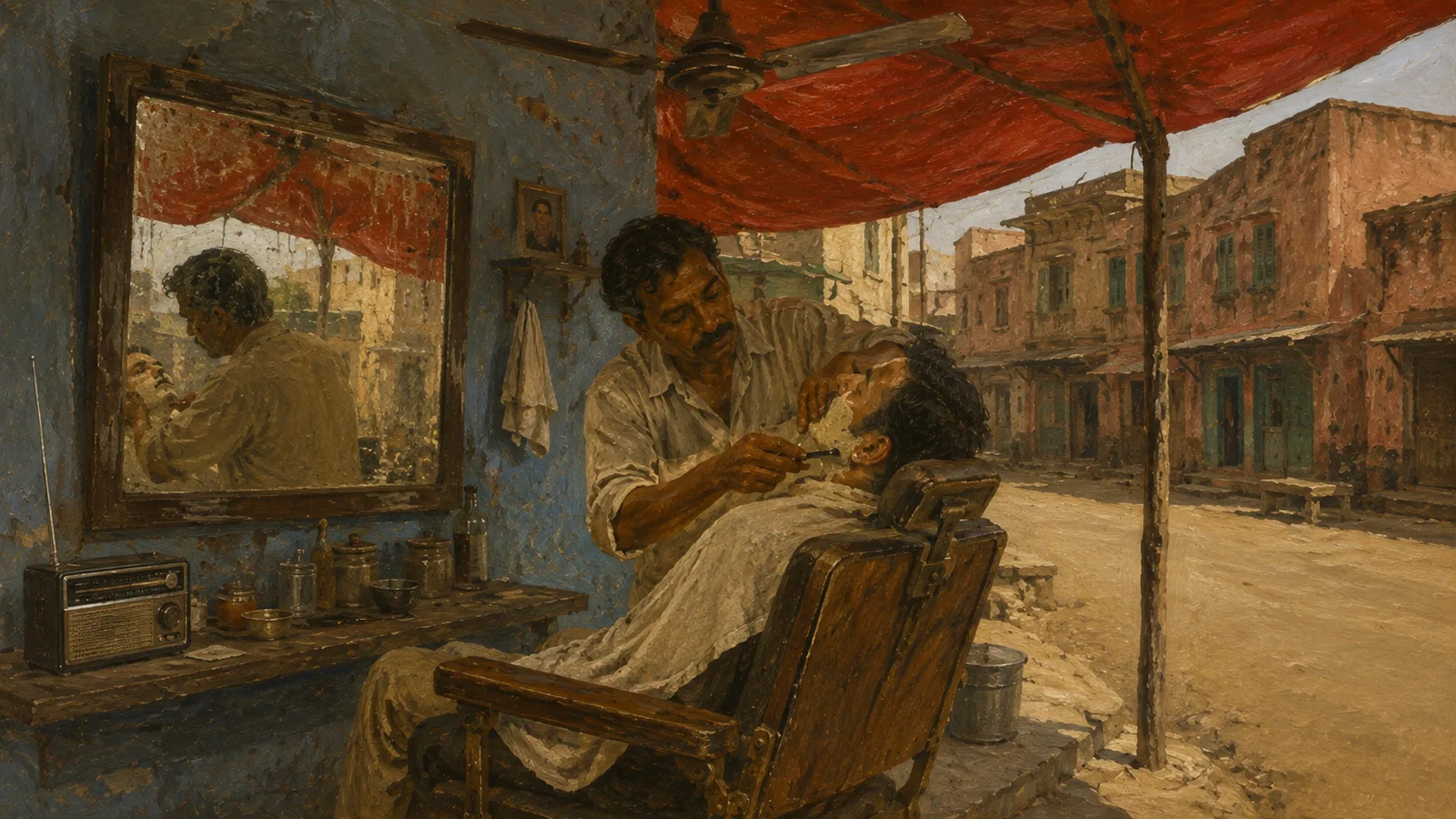
saloon.wtf is one page. There is a painted illustration of a street barbershop, a red awning, two men mid shave, a fruit cart, a cycle rickshaw. Over the top of it floats a clock, a small counter showing how many people are listening right now, and a dark player pill at the bottom with the track name in it.
That is the whole product. Around thirty songs and an embedded YouTube player. No signup, no email box, no settings, no scroll. You open it and it plays.
Meanwhile a site in the same wave has 227 songs and almost nobody has heard of it. So the size of the catalogue was clearly not the thing. Something else was.
It named something everyone had felt and nobody had said
This is the real mechanism, and everything else is volume.
Every Indian over about twenty five has sat in a barber's chair with a radio going somewhere behind them. Nobody ever had a word for that specific music. It was just what was on. The site handed people a name for it, saloon songs, and in one move turned a private and unremarkable sensation into a public category with a label on it.
You can see this in the replies. Almost nobody said "nice website". What people did instead was supply their own version of the same memory. The bus. The mithai shop. The tempo at 2am on the highway. The site opened a slot and a few hundred thousand people rushed to fill it.
That is also why the follow ups appeared so fast. The audience publicly wrote the roadmap in the comments, and other builders shipped it for free within the week.
Sound gets past your defences
A blog post arguing that 90s Hindi film music was culturally significant would have been ignored, and rightly so. Music does not ask you to agree with it.
You press play and the recognition happens in about two seconds, below the level of any argument. That is why every site in this wave is audio first even when the sites have nothing else in common, and it is the same reason the single serving site format works at all. One idea, delivered instantly, no reading required.
Sharing it is a way of saying who you are
Posting one of these links is a cheap and flattering piece of self description. It says: I am from a certain India, I am a certain age, I remember twenty rupee haircuts and a shared cassette.
Nobody can argue with it. Nobody looks bad for posting it. Content that lets people say something warm about themselves in one click will always beat content that is merely good.
The year was already primed
None of this landed in a vacuum. 2026 had been a nostalgia year in India since January, when a trend built on posting photos from ten years earlier swept Instagram and TikTok and then refused to die. The Y2K revival was running alongside it. Sad and soft was the default mood of half the Reels on your feed.
The common reading of why is not comforting. Nostalgia spikes seem to track present anxiety rather than actual affection for the past. The people driving this wave were teenagers or in early college in 2016. They are working professionals in 2026, they went through the pandemic years in between, and they are now in a job market being visibly rearranged by AI. Looking back ten years is a statement about now, not about then.
There is a specifically Indian edge to this too. What people are nostalgic for here is not a decade of media so much as a decade of shared physical conditions. The same thirty songs, the same cassettes, the same buses, the same shops, across an enormous country that agrees on very little else. That uniformity was manufactured by scarcity: one broadcaster, one cheap cassette catalogue, one state transport fleet. It is the same reason everyone of a certain age remembers the same songs and the same reason a whole generation can still recite the Doordarshan Sunday schedule from memory.
Doing more work did not mean getting more attention
The most interesting counterexample is deluxesaloon.space, built by a different person under a confusingly similar name. Two separate projects, two separate developers, and early coverage muddled them together.
That second site did an enormous amount of work. 133 tracks from 1986 to 2001, every one with a written note in both English and Hindi. Four rotations that change with the actual hour in India, so what plays at 2am is highway music and what plays on a weekday afternoon is haircut music. A clear statement about rights and how the labels get paid. It even asks for a tip while telling you the tip buys nothing.
It reported 78,684 people tuned in as of 12 August. That is a real audience. It is also roughly five percent of the reach of the site that did far less. Depth clearly builds something. It just does not appear to be what gets you the first hundred thousand people through the door.
Nobody knows how big this really was
Worth being plain about this, because most write ups are not.
Two sites in this wave have published any numbers at all. 1.6 million views on a post is not 1.6 million visits to a website, and the two figures can differ by a lot. For every other site in the wave, including some that got written about, there is no public traffic data whatsoever.
So it is entirely possible that this looked bigger than it was, and that a good part of what felt like a cultural moment was builders watching other builders and shipping their own version. If you want to see the full spread, the running list of these sites is the place to start, but treat the long tail as unmeasured.
One thing nobody in the wave has said out loud
Part of the appetite driving 2026 nostalgia is an explicit tiredness with the AI internet. People want things that feel messy and human and made by a person.
Nearly every site in this wave appears to be AI illustrated and most of them look AI coded from a template. The feeling on offer is handmade. The manufacturing is not, and no site mentions it.
That does not make the sites dishonest, and it clearly did not stop anyone enjoying them. But it is the strangest thing about the whole week, and so far nobody has brought it up.