Wiki6 min read
Chitthi Aayi Hai: the song about a letter from home
Chitthi Aayi Hai is a song from the 1986 Hindi film Naam. The title means a letter has come. Pankaj Udhas sings it, Laxmikant-Pyarelal composed the music, and Anand Bakshi wrote the words.
It is older than most of the music people mean when they say the nineties. It still ends up at the end of the playlist.
What the song is about
A letter reaches a man who has left home to work. The song is what the letter says.
It names the people who are waiting for him. It tells him what has changed at home since he went. It asks him to come back. That is the whole shape of it. There is no twist and no argument, only a family's situation read out loud to someone who is not there.
In the film, the man has gone abroad. Academic writing on the song reads it as a piece about the Indian diaspora, about the pain sitting on both sides of a departure, and about what a household gives up in return for what the money brings in.
The song does not describe homesickness. It stages the thing that sets homesickness off. A letter is opened, a list of names is read, and six months of not thinking about any of it arrives at once.
A ghazal singer in a film soundtrack
Pankaj Udhas was a ghazal singer rather than a regular playback voice. A ghazal in a Hindi film soundtrack was not the obvious commercial choice in 1986. It became one because of the cassette.
Recorded music in India had been a fairly expensive thing to own. That changed after Gulshan Kumar, who had been selling fruit juice in Delhi, founded Super Cassettes Industries on 11 July 1983, the company that became T-Series. He sold cassettes at roughly a third of the price of the originals. By the middle of the decade cassettes held around 95 percent of the market, and industry revenue went from about 1.2 million dollars in 1980 to 21 million in 1990.
So a song like this one could reach a truck cabin, a barbershop and a household in a small town in the same week, on a tape somebody could actually afford. Udhas became a household name from it.
Families posted cassettes instead of letters
The song is about a letter. The practice underneath it often involved no writing at all.
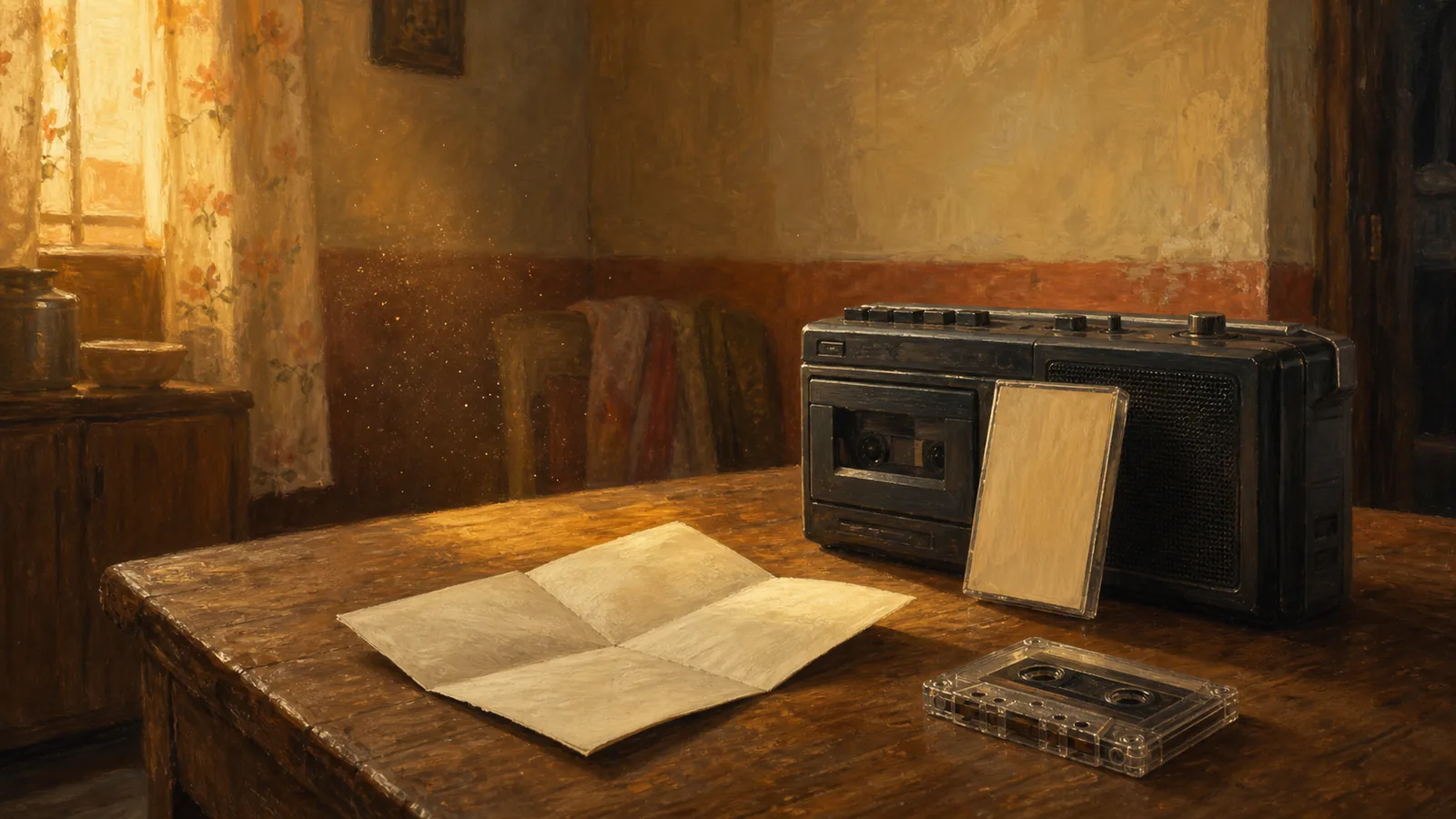
Through the 1980s and 1990s, Indians working in the Arab Gulf sent recordings on audio cassette to their families instead of letters. This is documented among migrants from Kerala and from the Telugu districts of what is now Telangana. Many of them did it because they could not write. The cassette was not a warmer alternative to a letter. For a large number of people it was the only way to say anything at all.
The reporting on this describes tapes of 60, 90 and even 120 minutes. Whole families gathered around the recorder once the button was pressed, talking over each other, laughing, crying, aware that the person far away would hear all of it. Then the tape was posted, and the wait for a reply tape ran to about a month. Men who were homesick rewound and replayed what they already had.
A conversation with a one month round trip. You said something into a machine, and a month later you heard what they said back.
The University of Edinburgh runs a Gulf Migrant Archives project collecting this material, and there is academic work on Dubai letter songs, a Malayalam genre about and for Gulf migration from the 1970s to the 1990s. This half of the cassette story is far less written about than the commercial half, so treat the detail as reporting and archive work rather than settled history.
It is the same object either way. The cheap cassette that carried film music into every barbershop and bus in the country also carried people's voices across an ocean, because the people themselves could not go.
Why it plays last
In August 2026 a run of small Indian nostalgia websites went around, each one a single page playing a fixed set of old film songs. We keep a running list of the desi nostalgia microsites as they appear.
One of them, deluxesaloon.space, opens its late night highway playlist with this song and says plainly that its whole catalogue descends from it, running from Chitthi Aayi Hai in 1986 out to Chaiyya Chaiyya at the end of the decade. Its note on the track calls it the song that invented the genre.
The site also frames it around truck drivers, men who are six weeks and three states from their families. That reading is the site's own. The academic sources deal with international migration, not internal migration, so the highway association is a judgement rather than a documented fact. It is a good judgement. The migrant in the film goes abroad, and the men listening to it in a cabin at two in the morning are moving between Indian states, and the song does not have to be about them to be for them.
Where it sits next to the rest of the canon
Most of the shared soundtrack of that period is shared for a mechanical reason. It was broadcast at everyone. Film songs came twice a week on Chitrahaar and on Sunday mornings on the Doordarshan song show Rangoli. Nobody picked those songs. They arrived, and they repeated, which is why so many people of one generation remember the same thirty of them.
Chitthi Aayi Hai travelled on the same machinery, but it is doing something the rest is not. It is the one that names the situation directly.
That situation runs through more of this canon than people notice. Radio listeners wrote postcards asking a stranger with a transmitter to play a song for someone they could not say it to themselves, a habit that made a small mica town famous, which is the subject of our page on the farmaish and Jhumri Telaiya. Soldiers on remote posts had songs mailed to them. Gulf workers posted their voices home. Drivers listened alone at night.
The through line is not nostalgia. It is separation, and music standing in for a person who is not there.
That is why the song ends the playlist rather than starting it. Everything before it is doing this quietly. This one says it out loud, in the form of a letter, to a man who is not home.